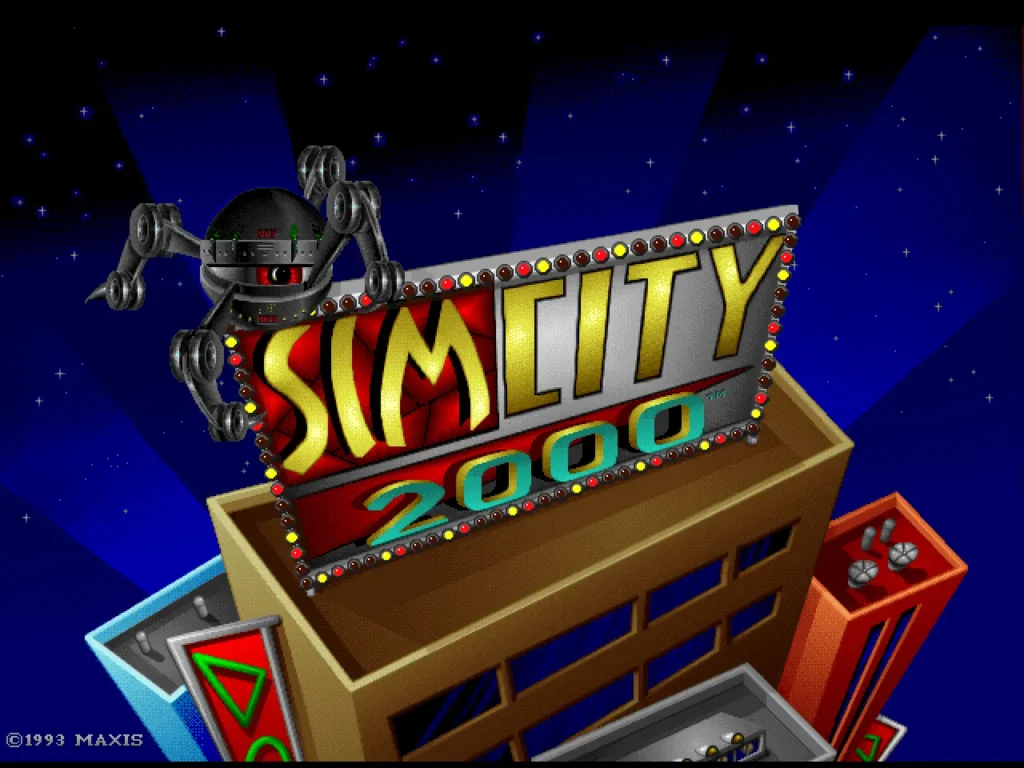
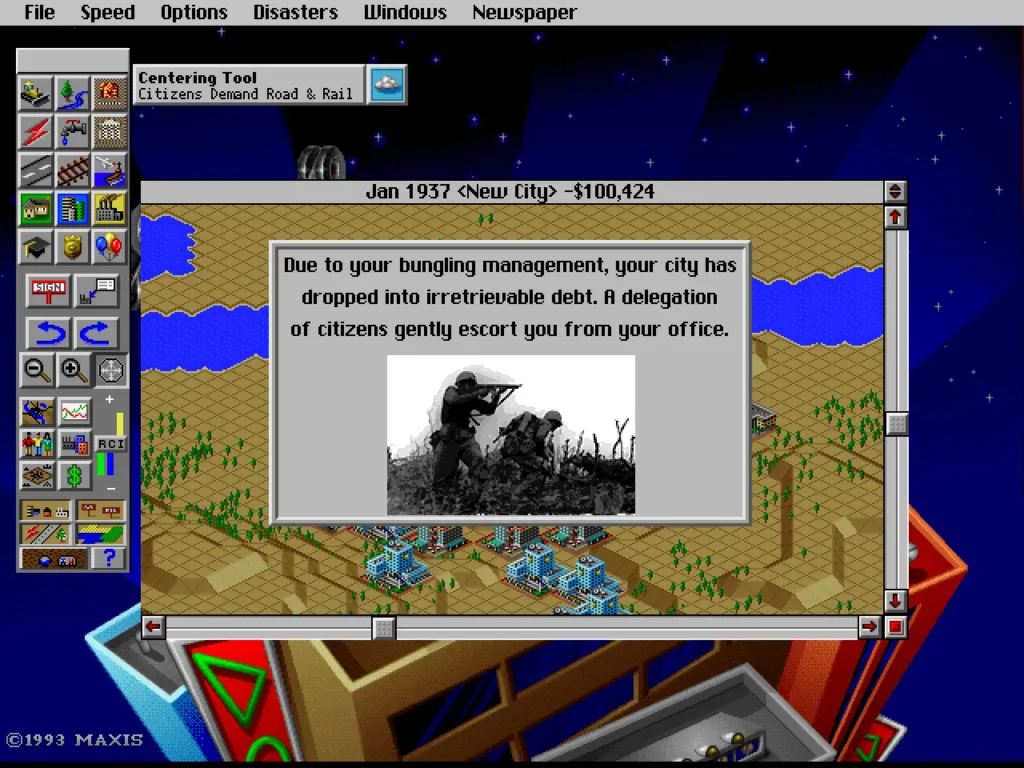
When I 1st played this game as a li’l kid in the late 90s I had no idea how the play it: while keeping the game paused I would wonder how you build actual buildings while seemingly doing nothing but building streets & “grass”, — & wondering why there was blue “grass” — which is odd, as in hindsight, you just build zones, not individual buildings, in the SNES SimCity, & that didn’t trip me up back then. Anyway, my idiot young self eventually figured out how to get buildings to grow, but needless to say my young self who always struggled with the simpler SNES SimCity still always struggled to get anywhere far, especially getting those tantalizing ecologies that are in this game & no others that I’d read ’bout but ne’er see for myself outside o’ the Urban Renewal Kit, which just let you plop anything you want without having to worry ’bout money or time. This game, still stingier than later games, tho not as stingy as the 1st, while also providing many sexy new services that add to your yearly costs — most notably water & expensive power plants with rather short expiration dates necessary for your city to flourish — made it e’en harder to keep in the black & avoid going so broke that, um… the military rises up & o’erthrows me in a violent coup — No, I’m not making that up: that’s the loss condition in SimCity 2000.
Anyway, that ended in my period o’ SimCity obsession that followed my inspiring defeat o’ the SNES version o’ the original SimCity when I decided to try the sequel, helped by a particularly detailed FAQ that explains how the game works.
The path to victory
One may ask what counts as “beating” SimCity 2000. Unlike the SNES SimCity, which has the clear goal o’ reaching the “Megalopolis” stage by getting 500,000 population, & later the Mario statue gift by getting 600,000 population, SimCity 2000, like its brethren, is mainly a sandbox that ne’er ends till the player gets bored.
Howe’er fans do consider this game to have 1 odd win condition: after 2150 you unlock the “Launch Arcology”, a large structure that can hold a massive amount o’ population ( & causes tons o’ crime ) @ the cost o’ 200,000 simoleons. Later versions o’ the game — including the GOG DOS version I played ’cause ’twas the only version I could get working on my computer — has an event where if you build 301 Launch Arcologies, a message pops up saying, “The exodus has begun”, & all the Launch Arcologies will fly away blow up. Thus, my goal was to build up a city big ’nough that I could make a healthy profit, & then when ready, bulldoze all the buildings in my way so I could replace them with Arcologies.
Strategies
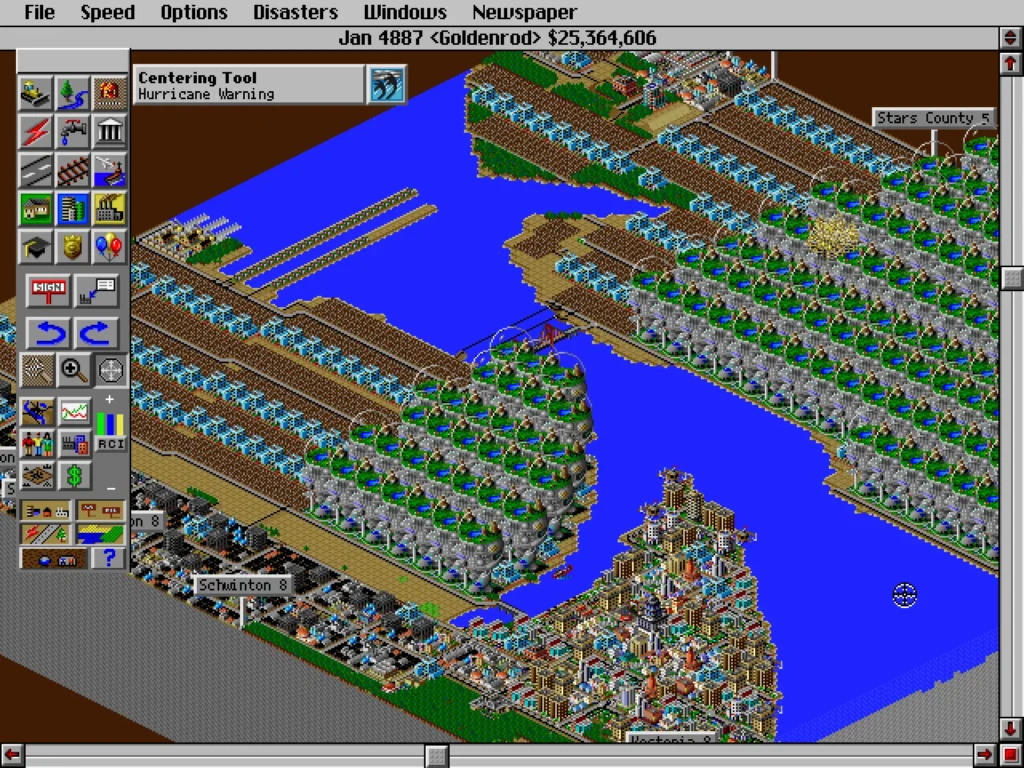
For a while, I always found SimCity 2000 to be the hardest game to not end up destitute. Having looked up strategies online — primarily a GameFAQs guide by Sixfortyfive that was, remarkably, started as late as 2024 — & tried them out, I have found that that was ’cause I was an idiot & didn’t know how to play this game.
Here are some o’ the strategies I tried:
According to this guide, keeping the demand bars as balanced as possible is the most important part to spurring development & that e’erything else — beyond meeting the demands explicitly made thru pop-up message boxes — is negligible, especially schools & hospitals, which, unlike in later games, do not do much. They’re apparently s’posed to lead to less pollutant industry, like in SimCity 3000, but according to the guide & my own experiments, what effect there is is minimal. In fact, e’en following the guide’s recommendation for lowering taxes on less pollutant industries & raising taxes on the mo’ pollutant industries, industry was still very polluting, so the ol’ fashioned trick o’ just keeping industry @ an arm’s length round the edges was the best solution.
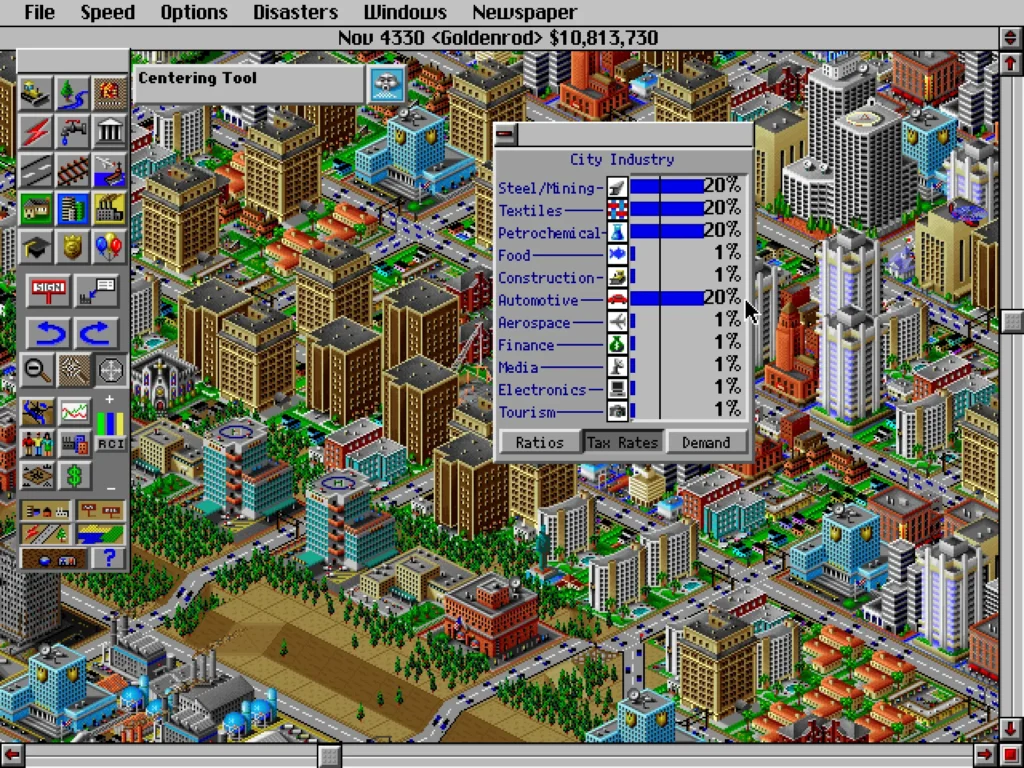
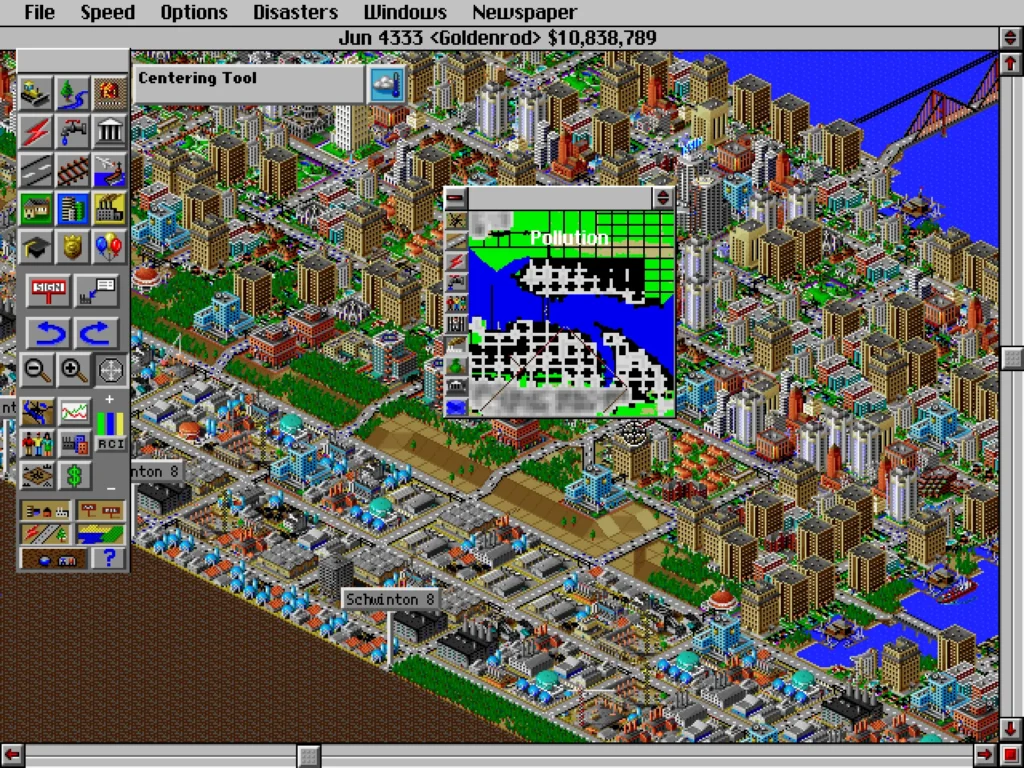
Sticking with high density zones: unlike later games, — especially SimCity 4 — which are stricter ’bout the environment necessary for getting any benefit from higher density zoning, SimCity 2000 will develop high density zones to their highest level from the start. The benefits o’ low zoning is that you get higher taxes per person & less traffic, but the higher populations per space makes up for the lower taxes per person & I ne’er encountered serious traffic problems during my run. I think I might have built some bus depots, which, according to the book SimCity 2000: Power, Politics, and Planning by Nick Dargahi & Michael Bremer, written around when this game was made, ( which I highly recommend for e’en those not interested in playing this game themselves, as it also offers a lot o’ fascinating information ’bout this game & its development, including interviews for the artists, musicians, & programmers; how to cheat by hex-editing save files; & analyzing how the different economic schools o’ theory, including neoclassicalism, Keynesianism, & Marxism, apply to SimCity ) are ridiculously o’erpowered @ eliminating traffic.
The guide mentioned a trick where you could raise the water level very high during the terrain-generating stage @ the beginning to maximize how much water each water pump produces, as well as surrounding each water pump with water on both sides.
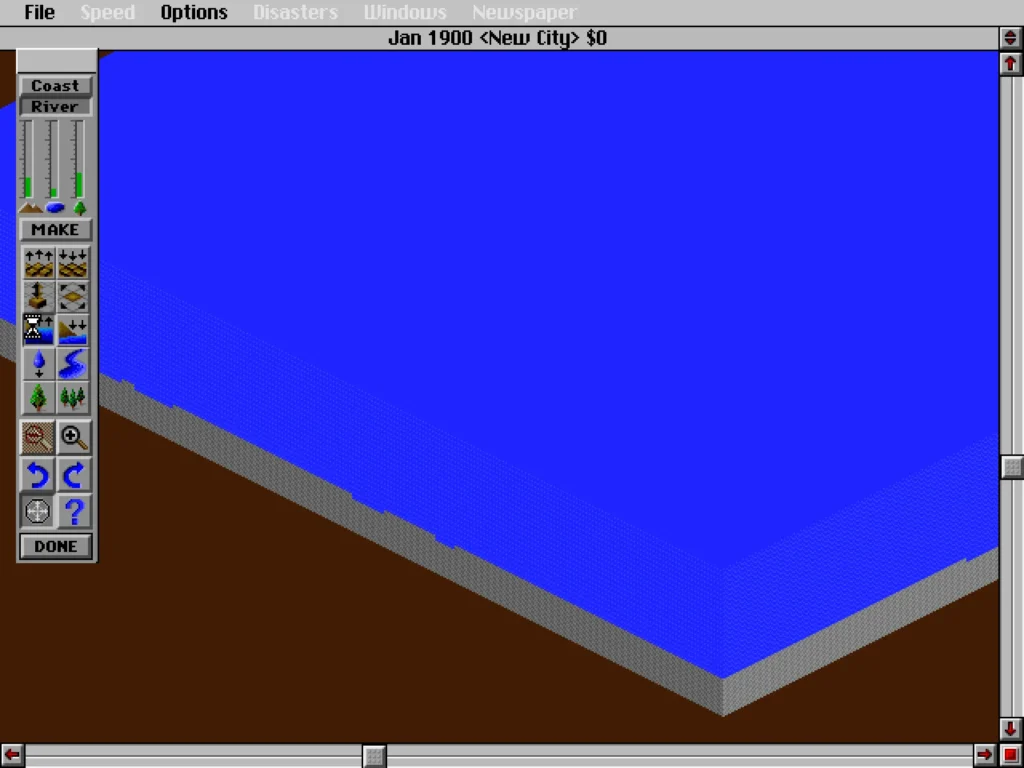
Putting this all together, I mainly just built zoning, as well as the rare demand that would pop up in message boxes. As it turned out, doing this made zones develop fine & allowed me to make tons o’ money. I would also build police stations, prisons, large parks, & trees to raise land value & keep down crime ( which, like the original SimCity, seems to mainly just affect land value ), tho I don’t know how important that was. ( Funnily ’nough, according to the guide, a single tree on a square provide just as much land value as a small park, so small parks are literally useless & a waste o’ money ).
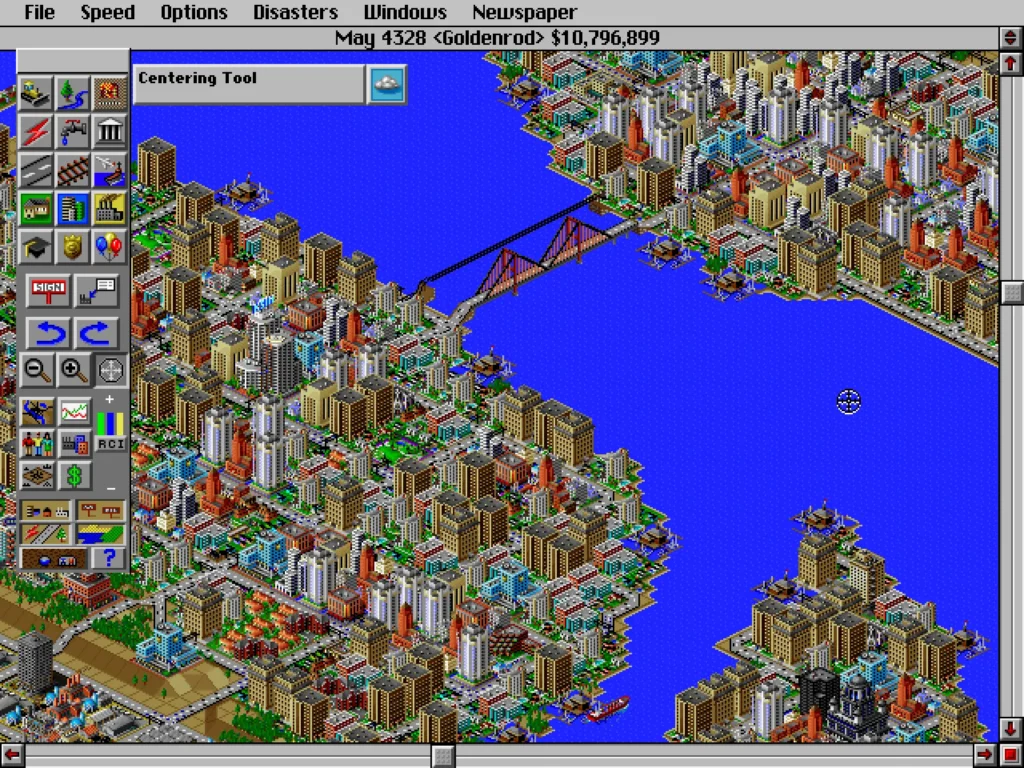
I e’en started to buy schools, hospitals, museums, & libraries to test out if it’d effect industry pollution ( especially since, embarrassingly ’nough, it took so long to figure out how to set specific industries’ taxes that I figured ’twas only in the Windows version o’ the game for a long while ) for the hell o’ it. ’Twas not as if they wasted space, since I could just put them in the space ’tween industry & residential & commercial: this game doesn’t care where you put educational & health buildings & doesn’t e’en require street access.
From there I filled the map as much as I could till I unlocked the Launch Arcologies & then started gradually bulldozing parts o’ my city to fit in as many arcologies as I could afford, as well as a bunch o’ police stations, since apparently Launch Arcologies create a ton o’ crime.
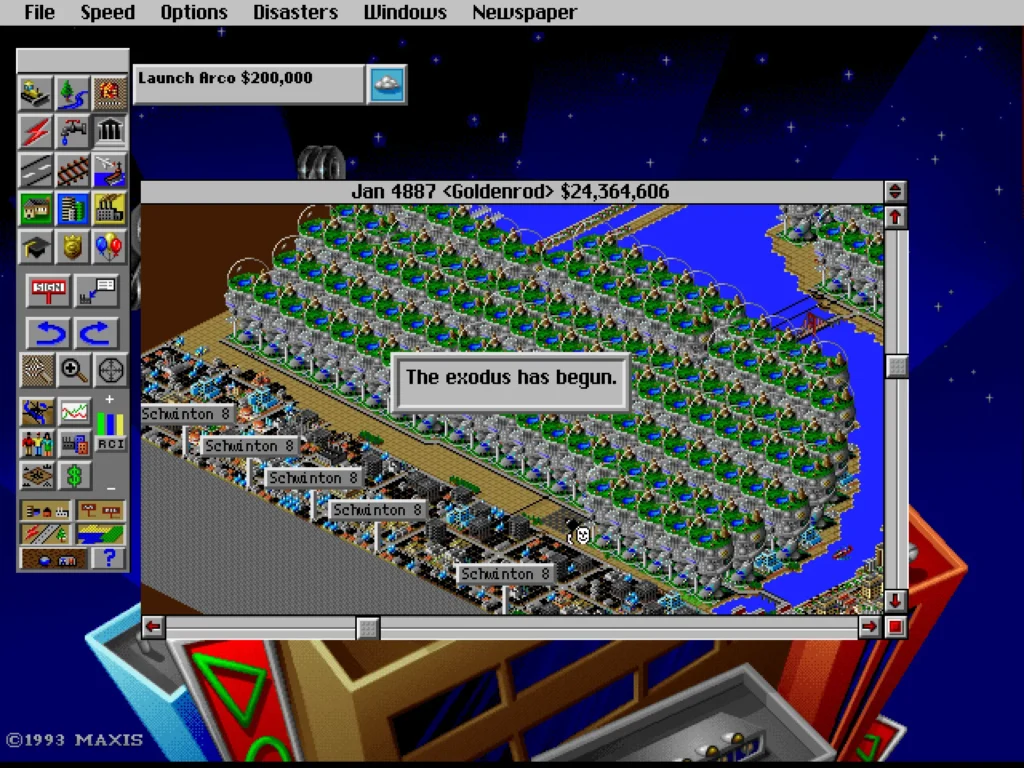
In short, I would say SimCity 2000 actually turned out to be the easiest o’ the SimCity games to complete: the extra complexity it adds to the simulation can mostly be ignored, unlike later games, while this game is much less stingy when it comes to money & especially space than the previous game.
Scenarios
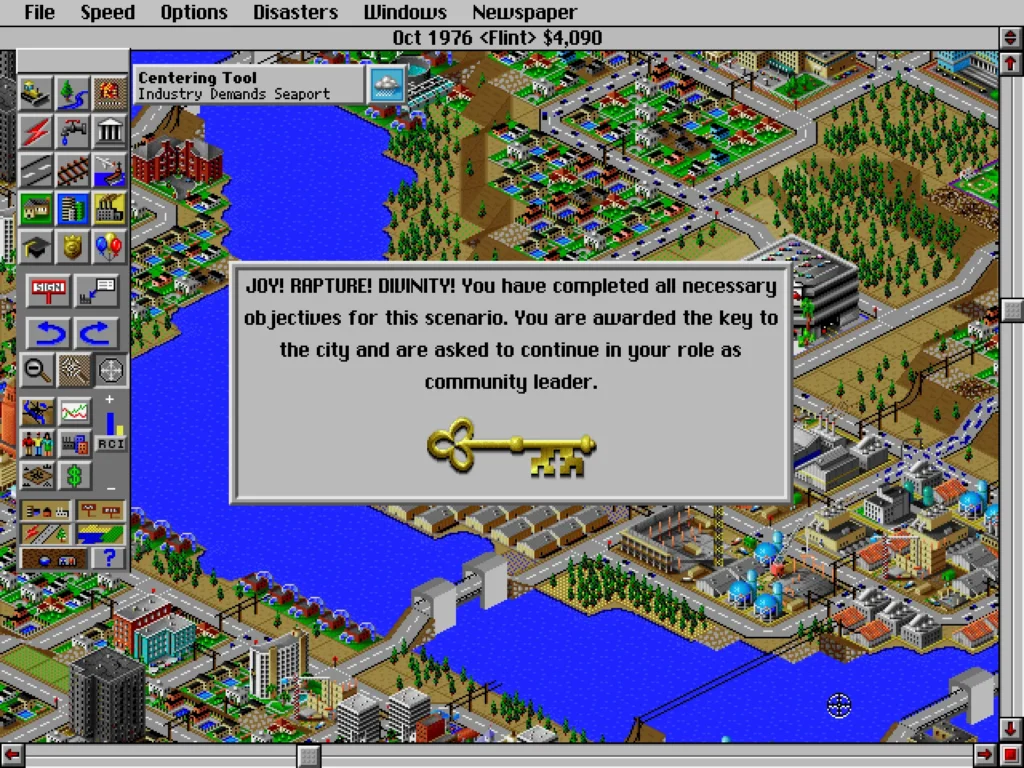
I actually didn’t bother to do mo’ than a few scenarios. I ne’er particularly liked scenarios in these games — in fact, I don’t know anyone who does — & I’m not doing this game for Retroachievements, since that would require me to play the SNES or PlayStation versions, & those are intolerable. Furthermo’, there seems to be a quirk or bug with how this game handles completing scenarios: when I completed my 1st it didn’t acknowledge I beat it in any way beyond not showing the failure screen & not kicking me out, leading me to @ 1st think there is no win screen. Howe’er, ’pon completing another, I did get the win screen, which just shows me getting the “key to the city”.
The 1st scenario I tried was Atlanta’s UFO scenario, where you have to clean up after a UFO attack & raise the population to a certain level — you know, the usual stuff — since ’twas listed 1st, only to find that it’s apparently a “hard-very hard” 1 & from an expansion pack. I failed it multiple times & gave up.
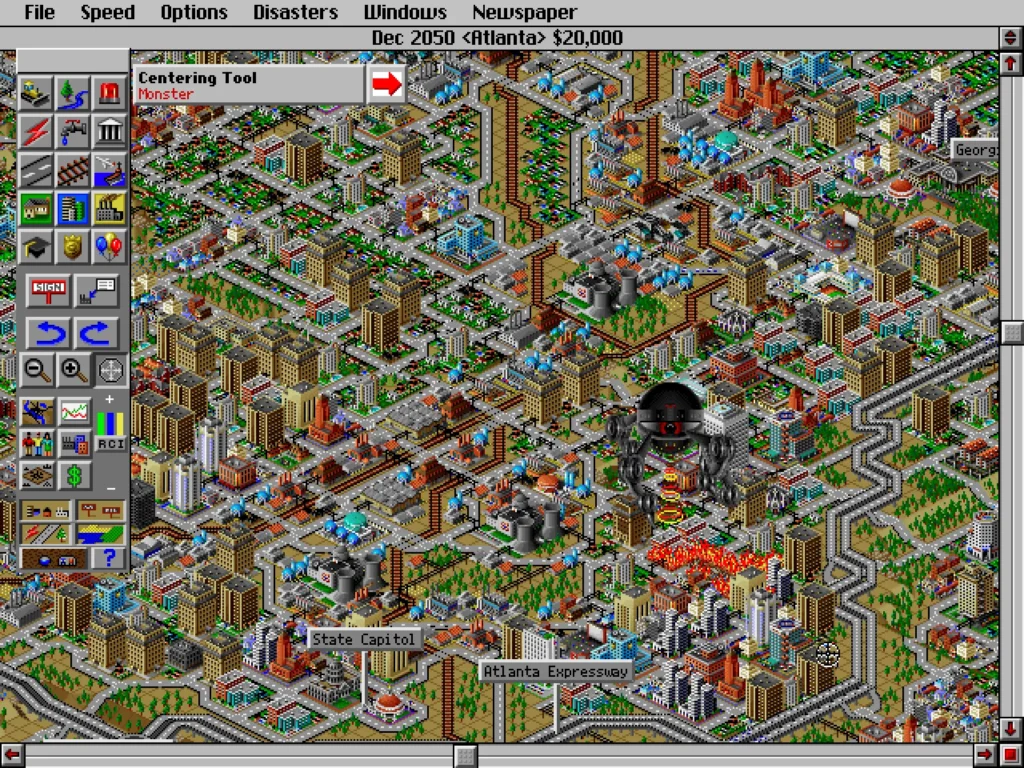
Then, in a bizarre form o’ extra thoughtlessness, I next tried Dullsville, which is the 1st listed on a walkthru I found on GameFAQs by Andy007, only to later realize that it’s difficulty is apparently “medium-hard”, so still not the easiest. I don’t know why nobody can order these scenarios by difficulty.
Anyway, I did finally manage to complete this scenario after a few failed attempts, tho I didn’t really follow the walkthru’s advice, beyond lowering taxes to push for faster demand, as much o’ it seemed counterproductive, like taking a loan right @ the start — ¿why would I borrow money I don’t need yet early & pay extra interest payments in the long run when I could just wait till I needed the money? — & building a bunch o’ schools & hospitals & enacting a bunch o’ health & education ordinances, which, as we’ve established, are useless, save for the rare schools & hospitals explicitly demanded by the message box.
The main challenge with these scenarios is that the time limit conflicts with the main strategy o’ balancing zone demand, as you can’t just wait round & adjust as needed like I did for the main game, thanks to how slow zones take to develop — especially the industrial zones, it seemed. The main strategy for these scenarios seems to be to figure out thru trial & error just how much zoning you need for each type & zone them out from the start while spending most o’ the time limit just waiting for zones to develop. That’s essentially how I completed this scenario: my earlier runs were mo’ conservative, developing slower, & thru that I would figure out how much o’ each zone was necessary, leading me to zone mo’ up-front on subsequent attempts.
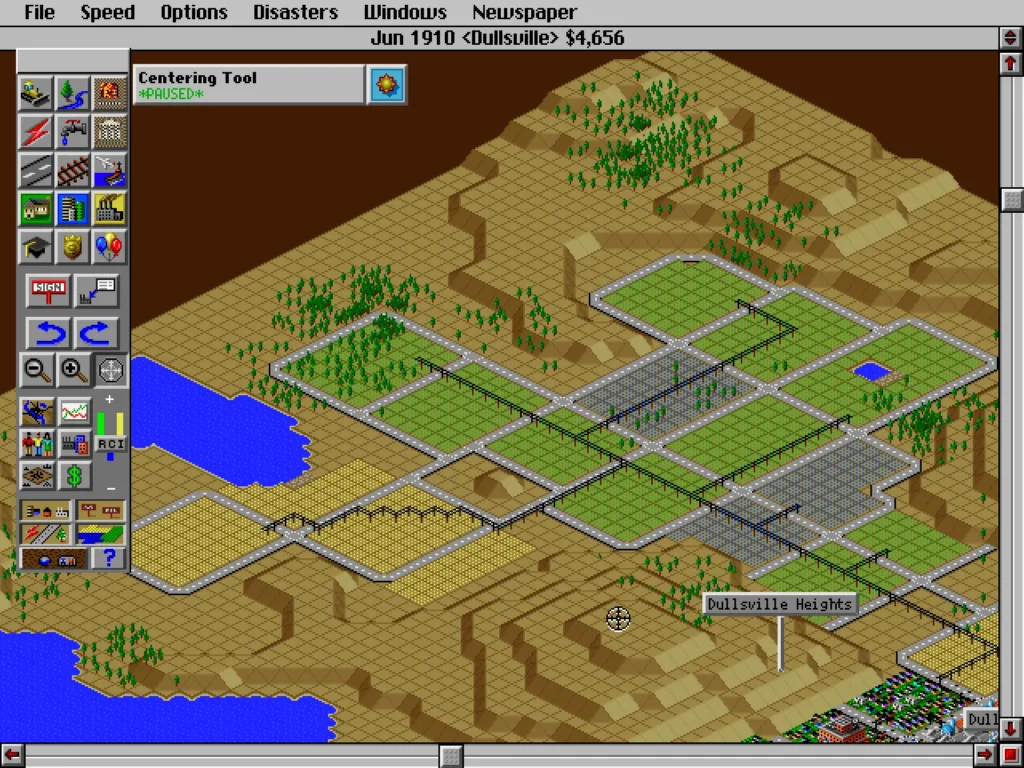
This was the scenario I managed to win, but not get the victory screen, & was going to leave it @ that, but decided to test out these strategies on a scenario actually ranked easy, Flint, whose challenge was to just raise the industrial population. & indeed, ’twas easy, requiring nothing mo’ than lowering industrial taxes to 0, deleting & rebuilding train track connections to other cities, — the main walkthru by Sixfortyfive mentions a bug where the game fails to acknowledge already-existing neighborhood connections when loading a city, which I assumed applied to scenarios, too — & bulldozing abandoned industrial zones — & I don’t e’en know if I needed to do the latter 2.
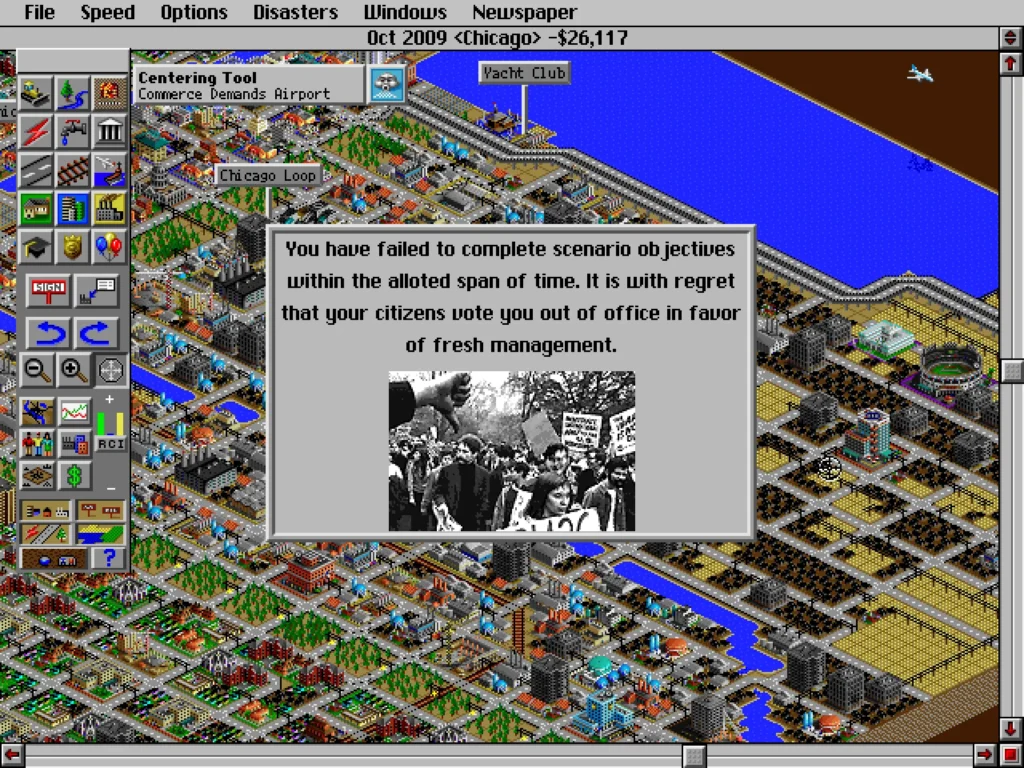
& then I got greedy & tried Chicago, which seemed similar — raise the industrial population again, while also decreasing pollution — only to run into the unbearable tedium o’ having to bulldoze & rezone a bunch o’ industrial zones idiotically placed right in the middle o’ residential & commercial zones & reconnecting the electricity e’erywhere & dealing with the airport completely burning down ’cause for some reason disasters are turned on by default & industrial absolutely refusing to develop e’en tho its demand was @ max level & they had power & water & — yeah, I’m good on these scenarios.
Other Versions
Super Nintendo
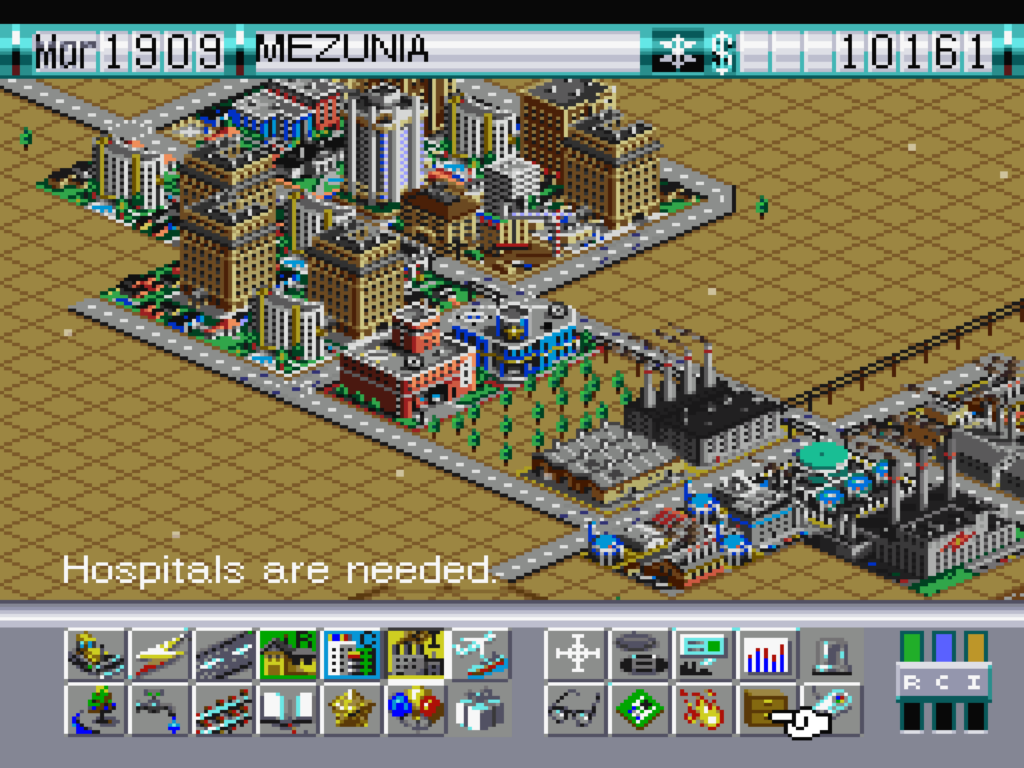
In stark contrast to the original SimCity, whose SNES version is the superior version, the SNES version o’ SimCity 2000 is far inferior. The original SimCity was just simple ’nough for its clunky console interface to be tolerable, but in order for them to be able to port SimCity 2000 to the SNES, they had to squeeze its mo’ detailed isometric graphics so that you can either barely seen anything beyond a tiny perimeter or can barely make anything out, as if looking @ your city thru the eyes o’ a drunkard. Trying to squeeze all o’ the detailed info the menus provide on such a small screen has the same problems. & with a mo’ complex game like this where you’ll want to move from menu to menu mo’, the clunkiness o’ using a crosspad to move a mouse round is mo’ noticeable.
But the worst part o’ this version is how unbearably slow it is. I looked thru all the mystery meat navigation in the UI & could not find a speed option anywhere, beyond being able to toggle on & off pausing. Trying to move the camera takes fore’er, as you have to slowly drag your fake mouse o’er to the edge o’ the screen & wait a second or so for it to load inching it a bit in the direction o’ the edge.
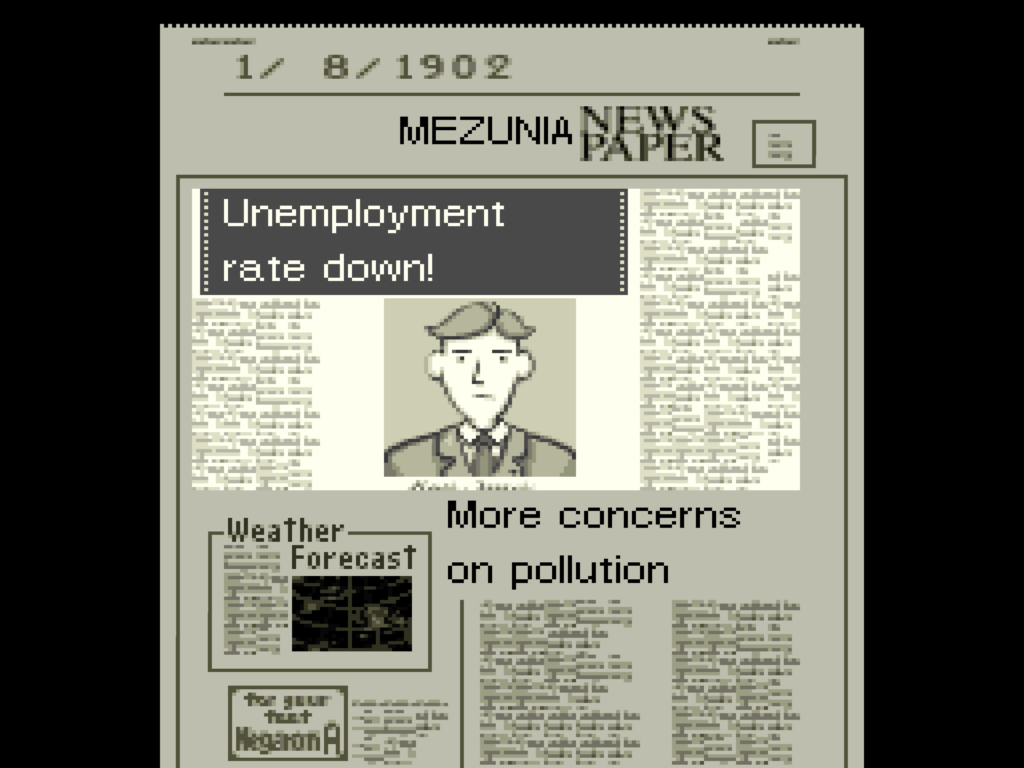
Also, the newspapers come much more oft than in computer versions & they have & they goofy poorly-drawn cartoons instead o’ the photorealistic graphics the computer version has.
PlayStation
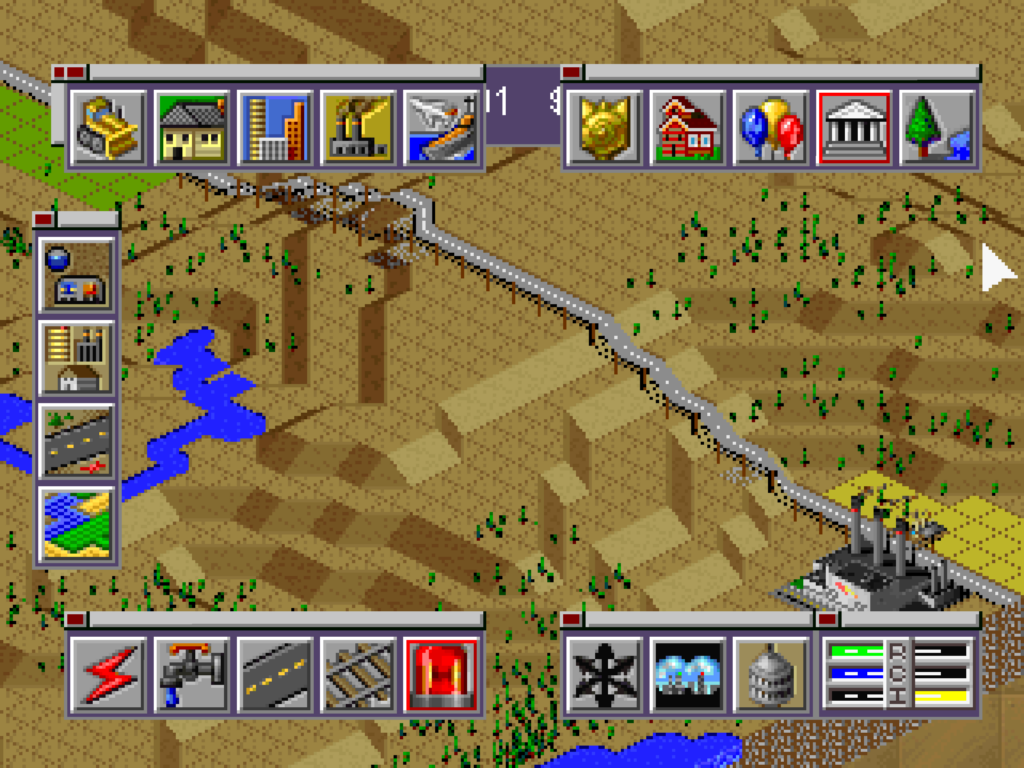
My family actually had this version when I was a kid, in addition to the PC version I mainly played. Coming back to it again, I can tell why I rarely played this version: amazingly, the PlayStation version might be e’en worse than the SNES version. For some reason, despite the PlayStation having higher resolution graphics, the UI is e’en mo’ pared down, to the point that you have to choose whether or not you want to have access to the top row o’ buildings, including all civics buildings, or be able to see how much money you have, your population, & what time it is. I could only seem to be able to move along the map when I had a construction type selected & the buttons weren’t onscreen. You have all these buttons & most don’t do anything. Also, when I build a power plant, road, residential & power lines connecting them, residential wouldn’t grow, despite the power lines showing that they were powered & speed was on “cheetah”. I’m sure if I bothered to read the manual for this version I could figure things out better; but it’s a bad sign when this version has the advantage o’ my having played it as a kid & it’s still less immediately understandable than the SNES version, for which I also didn’t read any manual & yet didn’t struggle this poorly.
The help option didn’t help, either. It told me I could get mo” detailed information with the “button combination” o’ Shift + Cancel. Too bad the PlayStation controller doesn’t have a shift key.
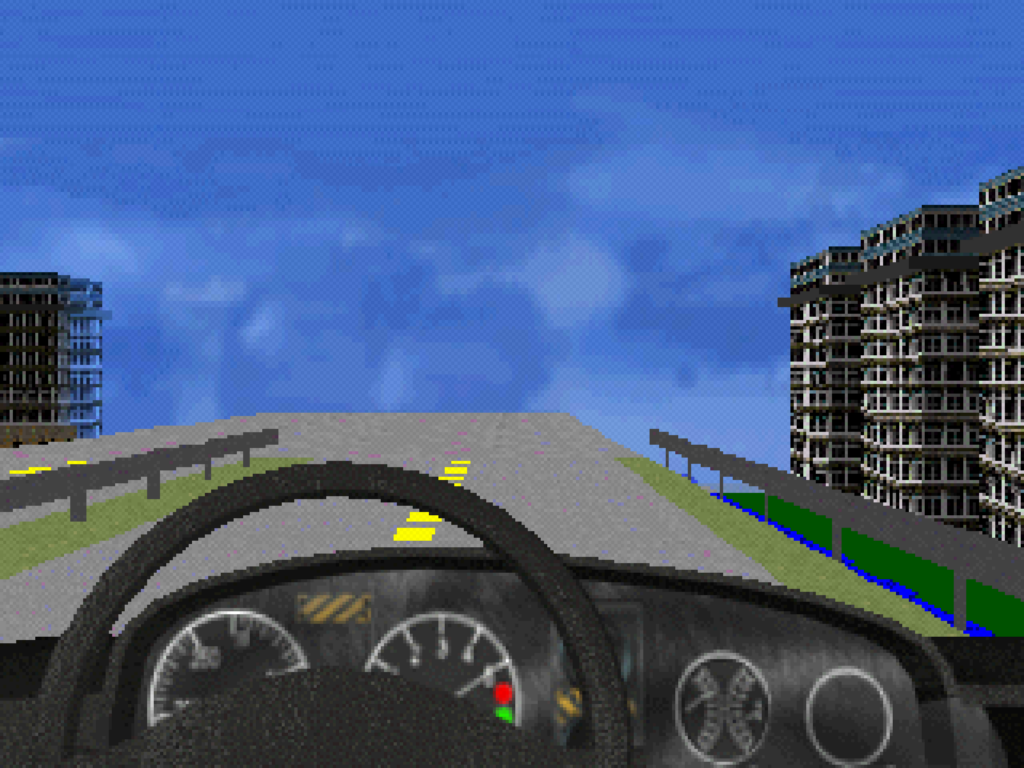
What I mainly remember from this version was some special driving section where you drive thru a 3D version o’ the city. It’s… not as cool as I remembered. You don’t drive the car itself: it slowly cruises down the road by itself. All you can do is change ’mong 3 whole views, front, left, & right, with the left showing your arm on the side o’ the door. Also, the draw distance is pitiful. ’Course, e’en in this case, the PC version is superior, as on PC you could play Streets of SimCity, — which was arguably a predecessor to Grand Theft Auto — where you could actually drive thru cities you made in SimCity 2000.
The 1 upside to this version is that it arguably has the best version o’ the soundtrack.
Nintendo 64
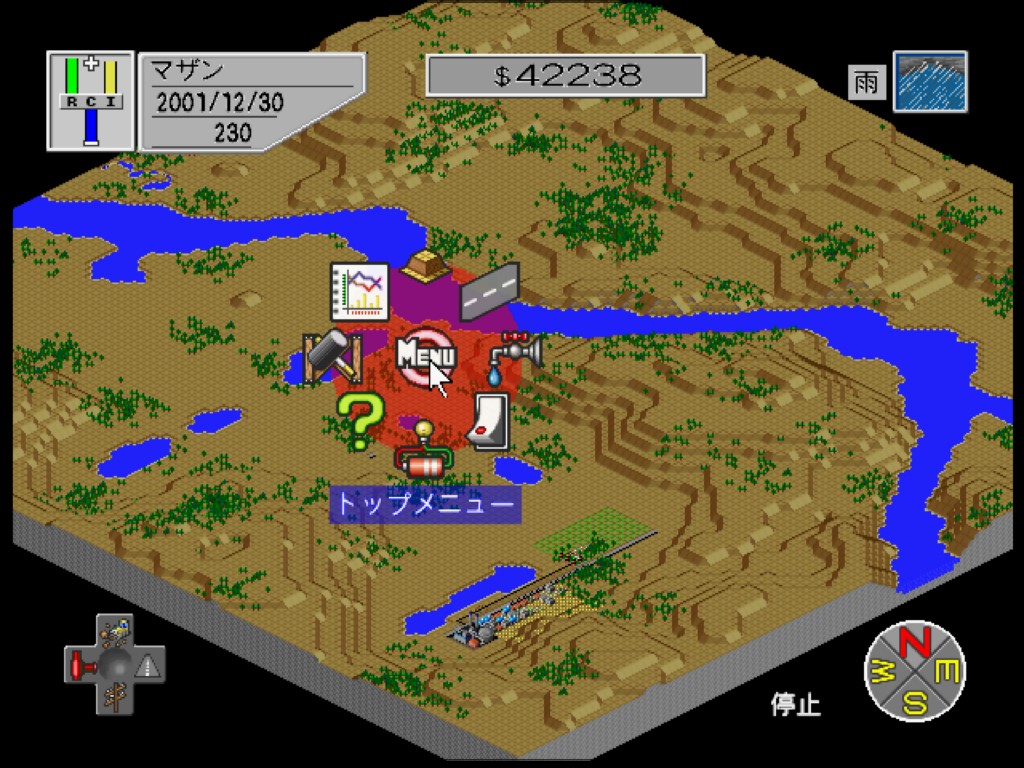
I found this while looking for the previous rom online. This was apparently only released in Japan, & thus was completely in Japanese. Despite this, I still found this game marginally easier to play than the PlayStation 1 & had much better visuals. As you can see from the screenshot ’bove, I was actually able to get stuff to grow on this version. Paring down the selector to a ring o’ groups & items was a much better compromise than what the previous 2 games did, while leaving plenty o’ room for the important info. I also like that they used the control pad for a quick-selection. Unfortunately, I could not figure out how to move the camera @ all, so the corners were off limits & tho I could zoom in to get a better view, I couldn’t zoom in to the part where I was actually developing my city.
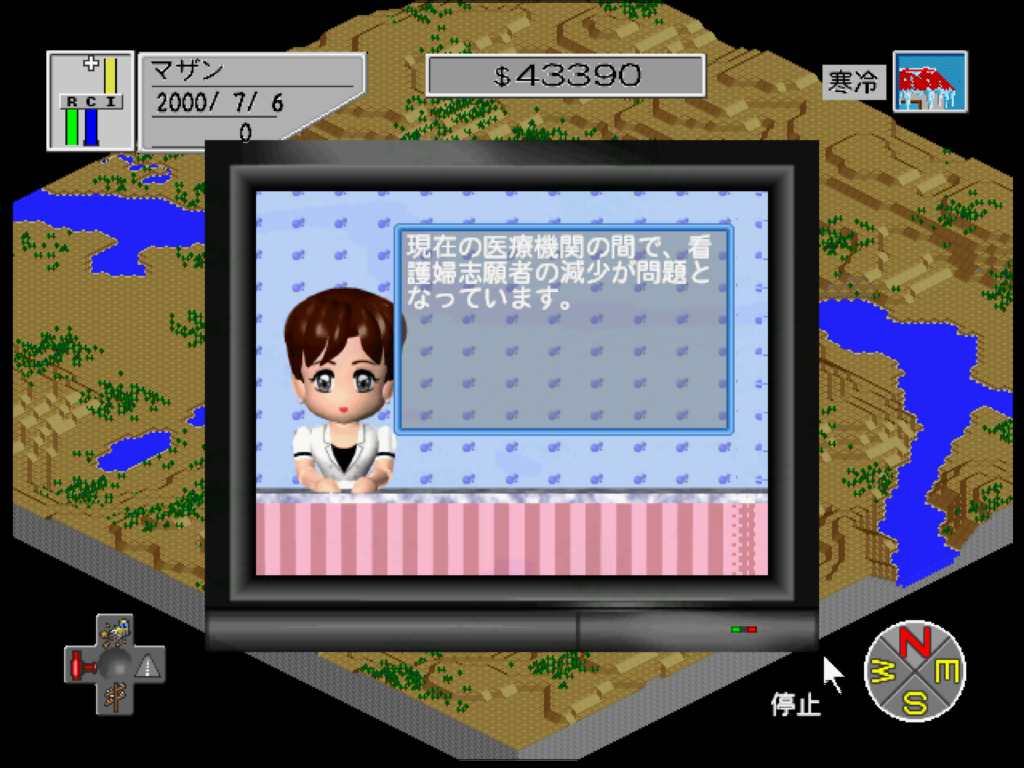
I also have to note the existence o’ an opening cutscene in cheesy mid-90s CGI & some TV screen with a chibi woman saying something. Since it’s all in Japanese, I have no idea what is being said in any o’ it.
Game Boy Advance
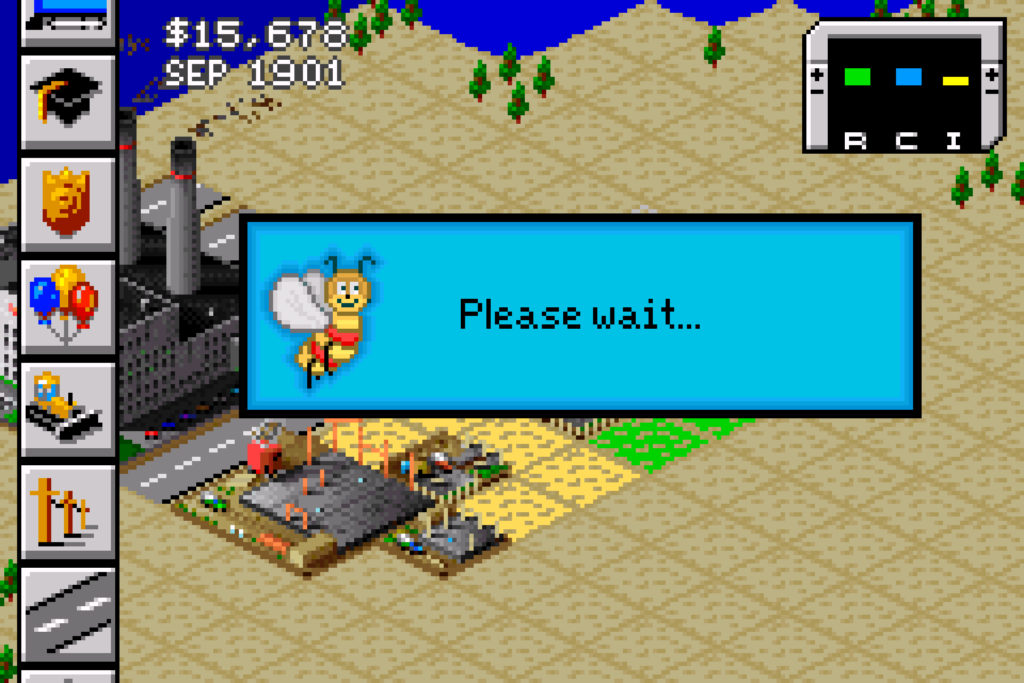
Lol, ’course this 1 sucks. & yet I was still able to build something better than in the PlayStation version. This is basically a worse version o’ the SNES version. As far as I know, you’re permanently zoomed in on ’bout 4 square tiles @ all times. Building anything makes you wait for a second or 2 while this cheap bumblebee loading animation with atrocious pillow shading shows. For some reason, while I could drag to make bigger zoning areas, I couldn’t drag to create lines o’ road & had to build road 1 piece @ a time & they only connected going in 1 direction. This game also forces a tutorial on you.
Most criminal, this version lacks the soundtrack: there’s some generic music during the menus & then no music @ all during main gameplay.
Music
SimCity 2000 has the weirdest soundtrack o’ any SimCity game, not helped by the fact that its soundtrack was composed o’ MIDIs, — as were most computer games @ the time, if they had a soundtrack @ all — which were susceptible to the different instrumentations found on the diversity o’ sound cards @ the time. Unlike the SNES SimCity, whose instrumentation is specific & consistent, & the soundtracks o’ SimCity 3000 & onward, which were just straight up recorded performances in WAV formats, which capture the sound in all its details itself, rather than just instructions for playing said song on given instruments, all o’ which have only 1 canonical version, there are theoretically an infinite # o’ versions o’ this game’s soundtrack. I could load this game’s MIDIs with a soundfont for Donkey Kong Country kindly provided by William Kage, for example, & get something out. In fact, I can be e’en mo’ depraved & generate an OGG & MP3 o’, say, the title screen theme & share it with you all:
Unsurprisingly, this sounds like ass.
As a laugh, I also created a version using the SimCity SNES soundfont:
Amazingly, it sounds e’en worse.
&, ’course, for the memes, let’s end this goofy experiment with this Super Mario 64 soundfont I found @ Musical Artifacts:
That doesn’t sound too bad, actually.
I could probably make the 1st 2 sound better if I actually fiddled with the instrumentation; but that’s not the point: the point is that SimCity 2000 doesn’t have music, but the ol’ school replacement: it has instructions for generating music. While the Donkey Kong Country soundfont wasn’t realistic back when this came out, — hell, getting Donkey Kong Country itself to play with the right sounds in emulators like ZSNES back in the late 90s was apparently beyond our technical capabilities — looking @ a “comprehensive SimCity music collection” on Simtropolis, the biggest SimCity website out there, there were a’least 3 major sound cards on PCs used @ the time, not including the Mac version. For this article, I went with the Microsoft GS Wavetable Synth recordings, as that was built into Windows 98, & therefore was probably the versions o’ these songs I encountered as a kid, playing these games on the family Windows 98.
To make things stranger, these songs seem to have names & not have names @ the same time, not unlike how James Joyce’s Ulysses has chapter titles while not having chapter titles — with the names existing purely in outside material, rather than the work itself. The song files themselves just have #s going from “10000” to “10018”, for whate’er reason. I guess they wanted to make sure they had space to accommodate adding 9,999 songs before these 1s without having to rename anything. Howe’er, if you look round online, you will see song names like “Downtown Dance” ( given to the title theme ) & “Railroad Rap”, whose origins are still a mystery to me. I can’t help noticing that these song names, with a setting followed by a type o’ music, sound suspiciously like the kind o’ song names that Donkey Kong Country 2’s soundtrack had; ’cept in that case, all those names but “Mining Melancholy” were official titles from the official soundtrack — which lacked the mine song, hence why that song ne’er got an official name till 2024, when Nintendo came out o’ the blue to call it “Kannon’s Klanking” in their weird mobile music app. E’en mo’ confusing, there is an extremely obscure CD officially released only in Japan called Sim-Melody: Music from SimCity 2000 that has completely different song titles that nobody online uses. I will try to apply these song titles that seem to exist only in online legend to the songs as best as I can match them, when they apply.
10000 / Harbor Hymn
For some reason, the 1st song — in both the game’s own music files, & in many collections — is not the title screen song, but this random depressing song. Something else strange ’bout SimCity 2000’s soundtrack is how wildly it swings from goofy & chipper music to some o’ the bleakest songs you’ll e’er hear in a SimCity game, songs whose melancholy is, nonetheless, stifled by the goofy MIDI instruments. In this Microsoft GS Wavetable Synth rendition we hear the low strings & bass accompanied by this weird tinny thunking drum that sounds like it came out o’ a WarioWare game.
Grade: B
10001 / Downtown Dance
The song that plays on the title screen, & thus the most well-known. It certainly is 1 o’ the catchiest o’ this game’s soundtrack — tho I would argue that there are catchier songs in this game.
Grade: A
10002 / Traffic Trouble
As many other people sharing this music had to say: I did not add this awkward sudden ending to this song; that is in the original.
10003 / Traffic Trouble II
For some reason this soundtrack has a copy o’ this song that just goes on longer.
Something I can say ’bout this song is it lacks any goofy instrument like “Harbor Hymn”’s clanking drum. Howe’er, it also lacks that nice low bass. Granted, I do like those squeaky brass horns in the middle.
Grade: B
10004 / Disaster Decision
This song has a fitting name, as it slowly builds up from alternating drums to adding slow strings, only for alert beeps to suddenly appear, followed by… ¿a fun, jazzy ditty? OK, maybe this isn’t a fitting title @ all.
Grade: 🚨
10005 / Repetition Rendition
Well, this 16-second song o’ 2 low boopy instruments sure is a song.
Grade: C
10006 / Mayor Mambo
Ah, now here’s a fire song: a catchy mambo in MIDI squeaky horns, seashell drums, & Seinfeld slap bass. Beautiful.
Grade: A
10007 / Serious Sims
This sure is a serious song… ’cept for those seashell drums from the previous song returning… as well as the weird mermaid scream a few seconds in.
Grade: C
10008 / Subway Song
This is ’nother favorite, with its simple rhythm & beat below & simple orchestral hits & piano notes up high. Its name is fitting, as e’ery rendition o’ this song has a subterranean sound to it.
Grade: A
10009 / Bluesy Berg
I think this is the song that plays when getting a newspaper e’ery year. Maybe I just imagined that. It’s short & stock ’nough to fit mo’ as a sting mo’ than background music.
Grade: B
10010 / Virtual Village – Short
1 o’ the best songs in this game. On certain versions o’ SimCity 2000, — specifically the 1 I had as a kid, which I believe was the Windows 95 Deluxe version — I remember ’twould play this song e’ery time you built a small park; so as a kid I’d keep building small parks to keep hearing this amazing jingle.
Grade: S
10011 / Virtual Village – Full
The actual best song is the previous song, but for a full minute. I don’t remember this song e’er playing in the actual game when playing as a kid, but I was able to find its file in the game files & listen to it on my own time.
Grade: S
10012 / Railroad Rap
This song has a similar vibe to “Subway Song” with its catchy bass-heavy beat matched with soaring high riffs. This song feels much louder & mo’ in your face, with a faster rhythm & those loud synth notes.
Grade: A
10013 / City Shimmy
This song is literally just “Traffic Trouble” but with the kind o’ goofy melodramatic opening music you’d expect to hear in a schmaltzy sitcom.
Grade: C
10014 / Chinatown Concerto
A nice simple ditty.
Grade: B
10015
¿How many copies o’ “Traffic Trouble” do they have in this soundtrack?
I could not find a different title for this song anywhere. I believe when I 1st saved these songs to my files, I called this “Newspaper News”, for some reason; but I’m almost certain I just made that title up.
10016
A very generic song, which probably explains why nobody bothered to name it.
Grade: C
10017
This is less a song & mo’ random soft slap drums & orchestra hits.
Grade: D
10018 / SimCity Segue
& we end with a song that starts with the most menacing noises you’ll e’er hear in any SimCity song, only to develop into a song that would sound catchy & jazzy if the instruments didn’t sound so loud & blaring.
Grade: ☠️🎷